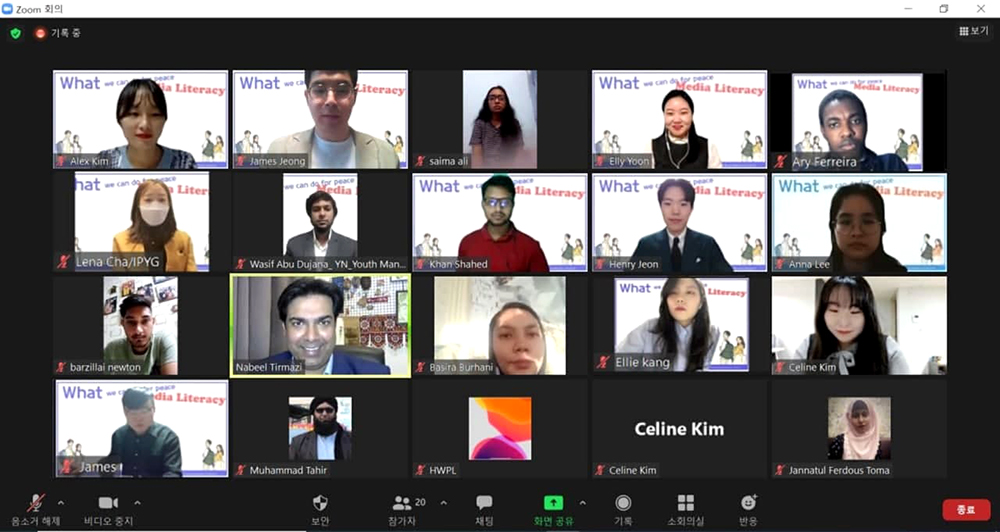
I was invited to deliver the keynote at “What We Can Do for Peace? Media Literacy,” an online programme organised by Heavenly Culture, World Peace, Restoration of Light (HWPL) and the International Peace Youth Group (IPYG). The room was full of young leaders from Pakistan and Bangladesh, and before I got to anything useful, I had to remove an illusion most of them were still carrying: that a good journalist can simply choose to be neutral.
Absolute objectivity does not exist. Every person filters facts through a lens built from where they grew up and what they were taught to notice. After 26 years working inside newsrooms and training journalists across Asia-Pacific, I have never once met a reporter, however experienced, who reports without that lens in place. Pretending otherwise does not make anyone more objective. It just makes the bias harder to spot. Recognising that lens turns out to be the starting point for reading the news honestly, not a flaw to apologise for.
Algorithms Did Not Create Bias. They Weaponised It
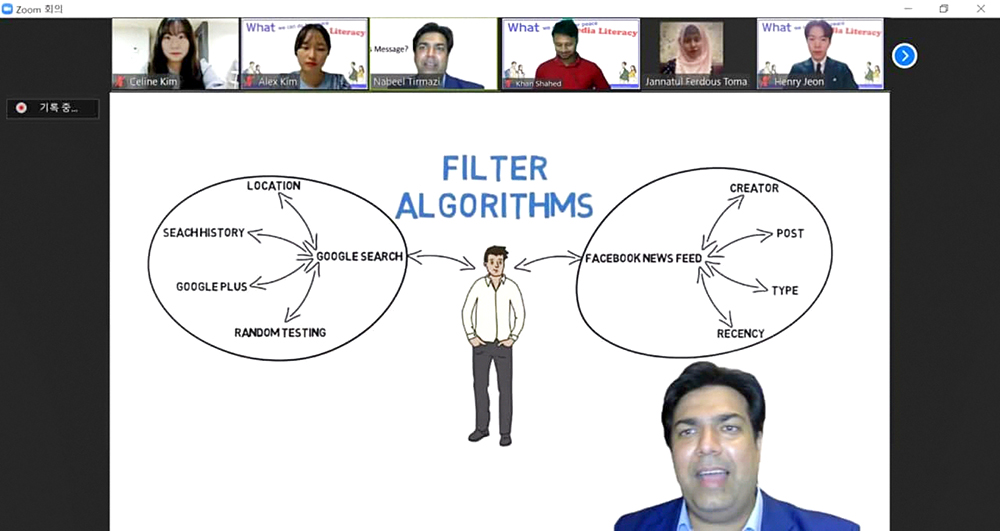
The platforms this audience uses every day were not built to inform them. They were built to hold attention, and the fastest way to hold attention is to keep feeding people content that confirms what they already believe. That constant agreement hardens over time, and echo chambers do not stay harmless once they set. In this region, they split communities along ethnic and religious lines, and generational ones too, quietly, one recommended video at a time.
Who decides what shows up at the top of your timeline? Almost none of the room had asked themselves that question before, and once the answer landed, something shifted. Accepting a feed without question hands control of your own thinking to a piece of code you will never see. Passive scrolling turns into active questioning the moment you start asking who benefits from what you’re being shown.
Media Literacy as a Frontline Defence
Vague instructions to “think critically” do not survive contact with a fast-moving news cycle. What survives is practice. The group worked through real examples of manipulated media built specifically to provoke fear or hostility, tracing which emotional trigger each example was engineered around. Once you can name the mechanism, the manipulation loses most of its grip on you.
Analytical thinking is a skill you build through repetition, not something a few gifted people are simply born with. Asking who produced a piece of content and who funded it gets you most of the way there. Asking what was left out of the frame gets you the rest. That habit does more to protect a society from manufactured outrage than any amount of fact-checking that arrives after the damage is already done. Regional stability depends on people doing this work themselves rather than handing judgement over to whatever an algorithm decides to surface next.
Peace Starts With Auditing Your Own Feed
The session closed on a point I return to in nearly every training I run: lasting peace is not a policy outcome, it is a daily discipline. It belongs to people willing to check their own information diet before they start criticising anyone else’s. Media creators carry responsibility for what they publish, and consumers carry responsibility for what they choose to believe and share. Both sides own a piece of this, and neither gets to hand the other the full blame.
Genuine dialogue only opens up once people are willing to question their own assumptions first. That is an uncomfortable place to start, and it is also the only foundation solid enough to hold a region together when the noise gets loud. Change how a young leader relates to information, and you change what their community is willing to believe next.
I served as keynote speaker for this HWPL and IPYG programme. Original event coverage is available here: https://www.hwpl.kr/language/en/9342-2/