Disinformation is not only a media problem. It is a trust problem, a leadership problem, and a civic responsibility.
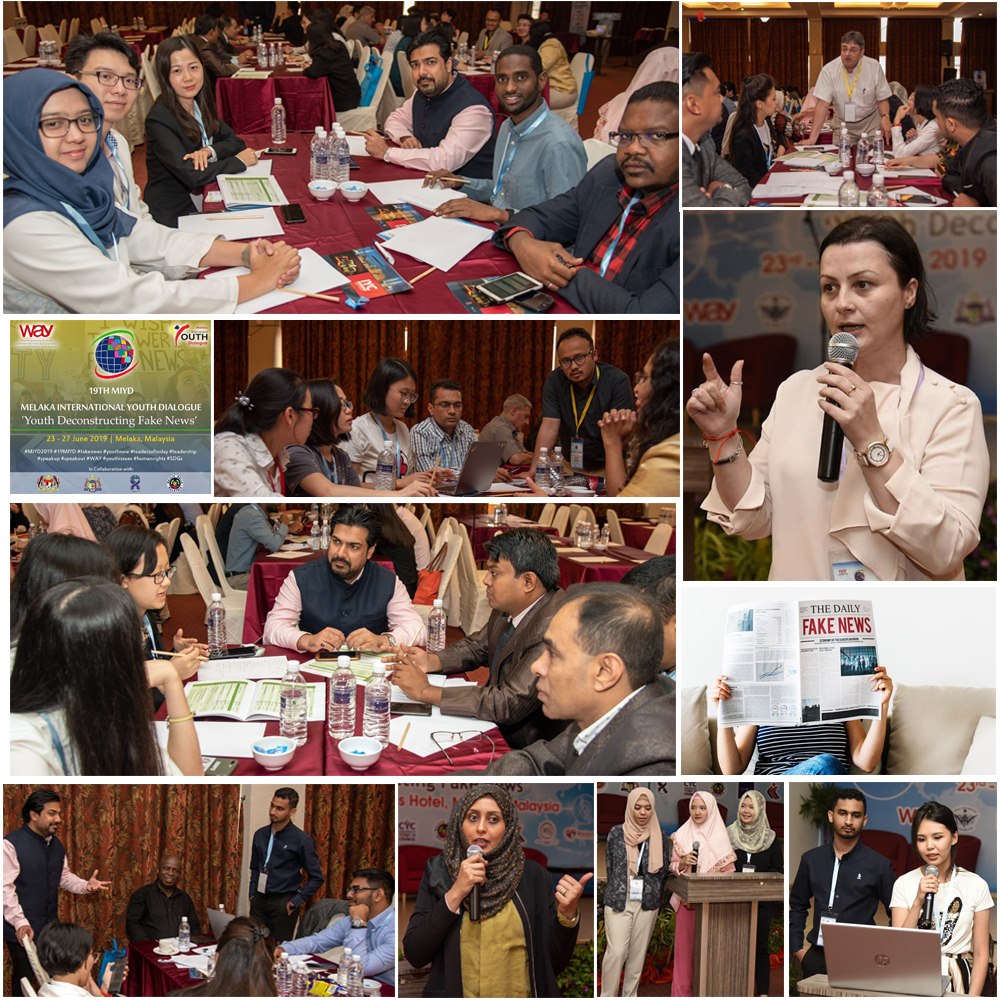
I had the honour of speaking at the 19th Melaka International Youth Dialogue in Melaka, hosted by the World Assembly of Youth (WAY) in collaboration with the Commonwealth Youth Innovation Hub.
The theme of the dialogue, “Youth Deconstructing Fake News,” brought together youth leaders from four different continents to examine one of the most pressing communication challenges facing societies today: how fake news and disinformation damage trust, public discourse, and social cohesion.
My presentation focused on the importance of engaging youth in citizen journalism and highlighting the Sustainable Development Goals (SDGs) through media with proper context, accuracy, and responsibility.
We also discussed different dimensions of fake news, including the psychology of sharing. People do not always share false information because they intend to mislead others. Many share because a story confirms their beliefs, triggers emotion, creates urgency, or gives them a sense of belonging to a cause or community.
That is why media literacy cannot only be about fact-checking. It must also address behaviour, emotion, identity, and trust.
Throughout the dialogue, participants shared how misinformation and disinformation are affecting their own communities. Some spoke about declining public trust. Others raised concerns about political manipulation, social division, digital harassment, weak media literacy, and the growing difficulty of separating credible information from emotionally charged content.
What stood out to me was the maturity of the youth leaders in the room.
They were not simply asking, “How do we stop fake news?”
They were asking stronger questions:
How do we rebuild trust?
How do we make young people more responsible digital citizens?
How should governments respond without restricting legitimate expression?
What role should media, civil society, private platforms, and youth organisations play?
These are the questions that matter.
Later that evening, the WAY Declaration was drafted, bringing together participants’ perspectives into a practical document with clear recommendations. The process showed the value of structured dialogue. People did not always agree, but they challenged ideas respectfully and worked toward solutions that were accessible, realistic, and action-oriented.
For me, this is what meaningful youth leadership looks like in the age of disinformation: informed, responsible, collaborative, and committed to public good.
I remain grateful to Ms Ediola Pashollari, Mr Patrick Sciarratta, Ms Aishwarya Narasimhadevara, Mr Steve Harison, Mr KyungTae Jang, Mr Binit Gurung, Mr Mike Nwielaghi, and all the youth leaders who contributed to the dialogue.
Special thanks to Pavel Sarwar for the continued support and friendship.
Presentation video: https://youtu.be/GSfjfVOy9Z4