3 Questions Every Broadcast Organization Must Answer Before Going Live with AI
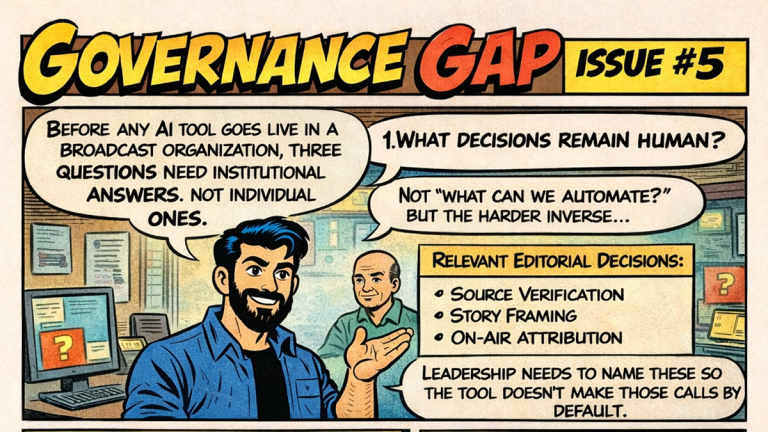
Before any AI tool goes live inside a broadcast organization, leadership should answer one simple question: Has the organization made institutional decisions about how AI will be used? In many cases, the honest answer is no. AI adoption often starts quietly. A producer uses a tool to support research. A sub-editor tests it for draft […]

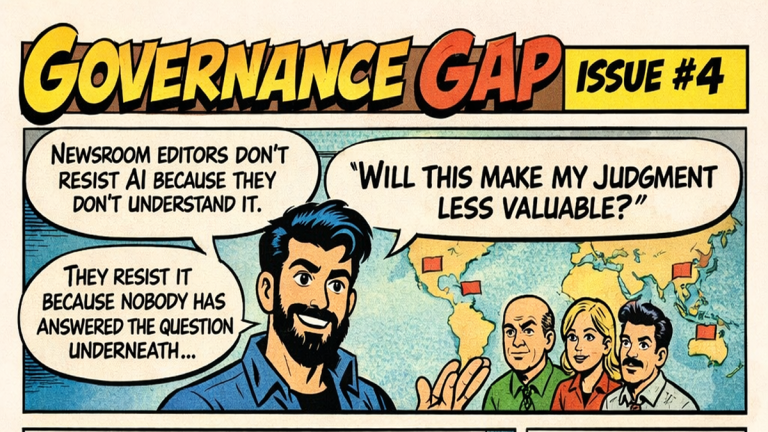
Why Editors Resist AI in Newsrooms

A common mistake is slowing down AI adoption in newsrooms across the world. Leadership often assumes editors resist AI because they do not understand the technology. The usual response is more training, more tool demos, and more excitement from the top. Still, the resistance remains. The deeper issue is rarely technical. Many editors are asking […]

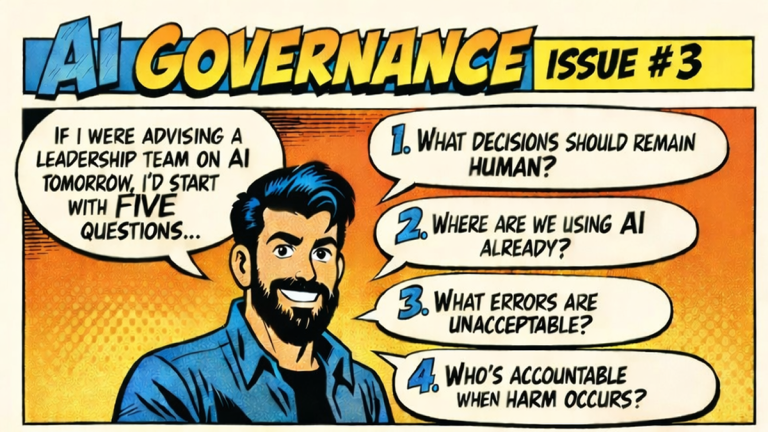
The Governance Gap Series #3: Five Questions Every Leadership Team Must Answer Before It Is Too Late

If I were walking into a leadership advisory session on AI tomorrow, I would not open with a framework. I would not begin with a policy template or a risk matrix. I would start with five questions, because the answers reveal everything about whether an organization is governing AI or simply tolerating it. The Five […]

The Governance Gap Series #2: Who Bridges the Gap Between Leadership and the Newsroom Floor?

Leadership has made the announcement. The strategy deck has been presented. The slides say “AI-powered transformation.” The vision is clear at the top. Walk down one floor into the editorial meeting, the production hub, the training room, or the operations office, and ask the supervisors what their role is in this transformation. Most will pause. […]

Safeguarding Women Journalists in Disaster and Conflict Reporting

According to a UNESCO–ICFJ global survey, nearly 73% of women journalists have faced online violence during their careers, and one in five have been physically attacked as a result of that abuse. In Asia-Pacific, these threats are magnified for those working in disaster zones, conflict areas, and politically sensitive environments, often with little or no […]